A startup ecosystem is more than the startups themselves. It also needs investors, universities, accelerators, mentors, events, public institutions and, perhaps most importantly, people who make sure all of those groups actually know about one another.
In Kaunas, one of the organisations trying to make those connections happen is Kaunas IN.
Kaunas IN is a public institution backed by Kaunas City Municipality and tasked more broadly with supporting the city’s economic development and international visibility. Its responsibilities stretch well beyond startups: the organisation works on attracting investment, supporting businesses, tourism, international marketing and the film industry.
Within that larger organisation sits Kaunas IN Startups, the team focused specifically on the city’s startup ecosystem.
Kaunas IN describes its role quite deliberately as an “ecosystem facilitator.” Rather than operating as an accelerator or venture fund itself, its job is to strengthen the environment around founders: connecting people, making existing resources easier to find, organising community events and helping startups navigate the different organisations and programmes available to them.
Today, Kaunas IN reports more than 180 startups in the city, an ecosystem valued at more than €1 billion, and an elevenfold increase in ecosystem value since 2019.
What does Kaunas IN Startups actually do?
The organisation’s startup work broadly falls into three areas: community, connections and information.
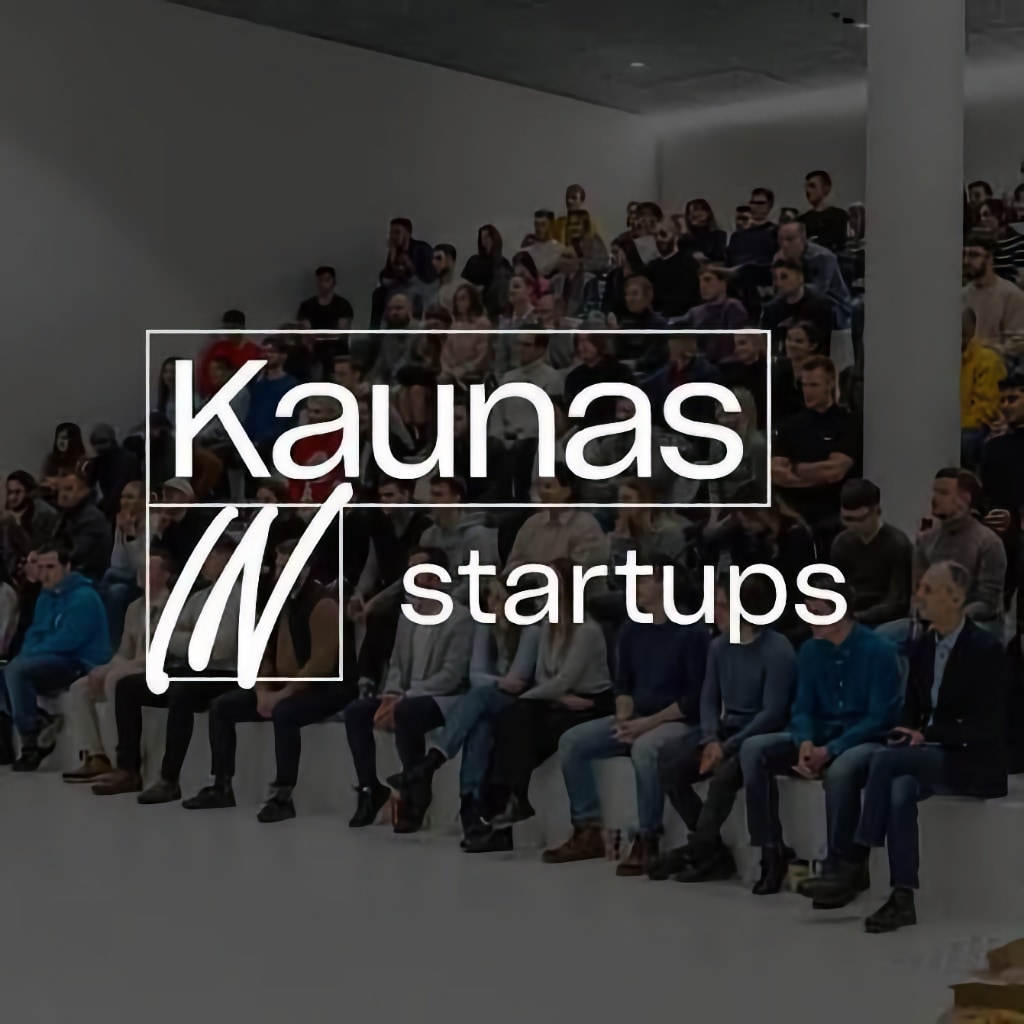
The most visible part is probably Startup Social Kaunas, a regular community event bringing together founders, investors, specialists and people simply interested in entrepreneurship.
Startup Social has developed into one of the recurring meeting points of the Kaunas technology community. Kaunas IN says the series has attracted more than 3,000 participants across more than 30 events, with typically more than 100 people attending each event.
The organisation’s 2025 activity report gives an idea of what sits behind those public events. During the year, Kaunas IN organised ten official Startup Social events plus two informal community events, attracting a combined 1,607 participants. It also reported 69 startup-related consultations, participation in three international startup conferences representing Kaunas, involvement in 11 events with organisational partners and representation at another 14 events through mentoring, discussions and presentations.
The second function is less visible but arguably just as important: helping founders find the right people.
Kaunas IN provides startup consultations, points founders towards relevant programmes and incentives, helps connect them with other startups and institutions, and maintains links with mentors, experienced founders, experts and support organisations.
It is therefore best thought of not as another programme founders have to apply for, but as a navigation layer for the ecosystem.
Who runs it?
Kaunas IN as a whole is headed by Tadas Stankevičius, who has led the institution since February 2020.
The startup activities form part of Kaunas IN’s Business Division, currently headed by Andrius Veršinskas. The organisation’s dedicated startup contact and public-facing Startup Ecosystem Facilitator is Santa Vozbutaitė, who is also listed as a Project Manager in the Business Division.
Vozbutaitė is also increasingly visible through Kaunas IN Startups’ events and communication. The organisation has been building separate social channels specifically for the startup community, including its own LinkedIn presence launched in late 2025.
Perhaps its most useful product: the ecosystem map
For somebody new to the Kaunas startup scene, one of Kaunas IN Startups’ most useful resources may actually be something much less glamorous than an event: its Startup Ecosystem Map.
Explore the Kaunas Startup Ecosystem Map
Instead of presenting the ecosystem as one enormous directory, the map divides resources according to where a company is in its journey: Idea, Launch, Growth and Sponsors.
Under those stages are accelerators, incubators, funding sources, coworking spaces, universities, legal resources, startup media, events, potential advisers and other organisations. It is essentially an attempt to answer a simple founder question: I am building something in Kaunas — who should I talk to next?
The resource was launched in 2025 specifically to bring the programmes, investors, organisations and information channels available to Kaunas founders into one place.
Following the Kaunas startup ecosystem
Kaunas IN also maintains several useful public resources for anyone wanting to understand what is happening in the city:
- Kaunas IN Startups — the main overview of the initiative, its activities and Startup Social Kaunas. Kaunas IN Startups
- Startup Ecosystem Map — programmes, investors, accelerators, mentors, support organisations and other resources organised around a startup’s development stage. Kaunas Startup Ecosystem Map
- Kaunas Startup List — a searchable directory of companies in the ecosystem, including indicators such as employees, salaries and taxes paid. Kaunas Startup List
- Startup Events — Kaunas IN’s listing of startup-related events taking place in the city. Kaunas startup events
- Kaunas IN Startups on LinkedIn — increasingly the most immediate channel for startup news, events, ecosystem resources and short profiles of Kaunas companies. Follow Kaunas IN Startups on LinkedIn
- Kaunas IN reports — annual and quarterly reports provide a more detailed look at what the organisation actually does and the results it reports. Kaunas IN organisation and reports
Building the connective tissue
Startup ecosystems are often measured through funding rounds, valuations and unicorns. But there is another layer that is harder to quantify: how easy it is for a first-time founder to find an experienced entrepreneur, discover a grant, meet an investor, locate an accelerator or simply walk into a room full of other people building companies.
That is the part of the ecosystem Kaunas IN Startups is trying to develop.
The organisation does not build the startups. It does not make the investments. And it does not replace the universities, accelerators, investors or private communities already operating in Kaunas.
Its value is in connecting those pieces.
For a relatively compact startup city, that can be a meaningful advantage. When the distance between “I have an idea” and “I know who I should speak to” becomes shorter, the ecosystem itself becomes easier to enter.
And for anyone trying to understand the Kaunas startup scene, Kaunas IN Startups is probably one of the best places to start.