
Most startup stories begin with a company searching for a business model.
Eneba already found one.
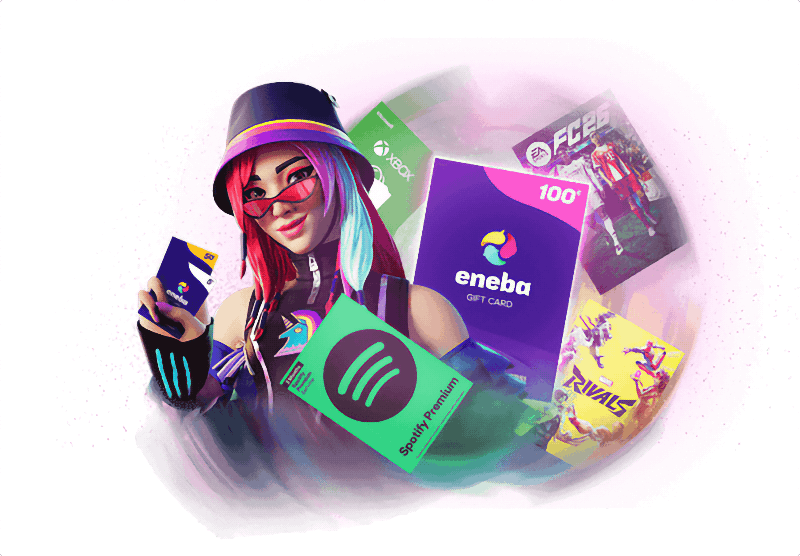
The Lithuanian company built a global marketplace where gamers can buy digital games, gift cards, subscriptions, in-game currencies and other digital entertainment products from competing sellers.
It worked.
By 2025, the Lithuanian company behind Eneba, UAB Helis Play, reported €63.6 million in revenue and €7.85 million in net profit. Revenue grew about 43% in a single year, while net profit nearly tripled.
The wider platform reaches gamers around the world. In late 2025, Eneba said its ecosystem connected around 20 million gamers across more than 100 countries, offered more than 100,000 digital products and worked with over 300 commercial partners. Its current public company profile separately lists more than 10 million registered users and a catalogue of over 80,000 products.
For many companies, that would be the story.
Build the marketplace.
Scale it.
Make it profitable.
Keep growing.
But Eneba is now trying something considerably more ambitious.
It wants to use the distribution network, gaming data and commercial relationships it has spent years building to enter a much larger battlefield:
mobile gaming.
And this time, the competitors sitting between developers and players include Apple and Google.
Two gamers from Kaunas
Eneba launched in 2018.
Its founders, Vytis Uogintas and Žygimantas Mikšta, were long-time friends, gamers and students at Kaunas University of Technology when they began building the company.
The initial idea was relatively straightforward: create a better marketplace for digital gaming products.
But digital-game marketplaces have a particular problem.
The product often does not physically exist.
A customer buys a code.
The seller may be on another continent.
The game publisher may be somewhere else entirely.
The transaction needs to happen almost instantly.
And if anything goes wrong — a stolen payment card, a fraudulent account, an invalid key or a disputed transaction — there is no physical package sitting in a warehouse that can simply be inspected.
For a marketplace selling digital goods, trust is part of the product.
That became one of Eneba’s early areas of differentiation.
The company built its own risk-management systems and used machine learning and device-fingerprinting technology to identify suspicious transactions. At the same time, it tried to make purchasing increasingly frictionless, including a one-click buying experience and localised product discovery.
The idea was not simply to sell cheap game keys.
It was to make a fragmented digital market feel like a normal e-commerce experience.
The marketplace problem
A marketplace only works when both sides show up.
Gamers need enough products and attractive prices to make visiting worthwhile.
Sellers need enough gamers to make listing their inventory worthwhile.
Each side makes the other more valuable.
Once that loop begins working, it becomes difficult for a newcomer to reproduce because the real asset is not the website.
It is liquidity.
Eneba gives verified sellers a place to compete for buyers, while players can compare offers for the same digital product.
For publishers, meanwhile, Eneba increasingly presents itself as an alternative distribution channel capable of opening additional markets and revenue streams.
The company now serves several groups at once:
gamers looking for products and better prices;
sellers distributing digital inventory;
game publishers looking for additional reach;
and creators and affiliate partners bringing traffic into the ecosystem.
That is what transformed Eneba from an online shop into a marketplace.
And marketplaces can become powerful businesses once they achieve sufficient scale.
Then the pandemic arrived
Eneba was already growing rapidly when COVID-19 dramatically increased demand for digital entertainment.
Gaming consumption surged.
People were stuck at home.
More entertainment moved online.
And Eneba suddenly had to deal with considerably more demand than its young organisation had originally been built for.
By the end of 2020, the company said usage had increased as much as tenfold during the pandemic period, while the United States had emerged as its fastest-growing geography.
The team expanded rapidly to around 130 people.
That growth also attracted venture capital.
Across 2019 and 2020, Eneba raised close to $8 million across its seed and Series A financing, with investors including InReach Ventures, Practica Capital, FJ Labs and strategic angel investors.
The 2020 round included backing from Mantas Mikuckas of Vinted, while Practica Capital and InReach Ventures led the major financing round.
For a Kaunas startup only a couple of years old, the speed was remarkable.
But what happened afterwards may be more interesting.
It did not need endless venture rounds
There is a familiar startup growth pattern.
Raise money.
Spend it to grow.
Raise a larger round.
Spend that.
Raise again.
Eventually, either reach profitability or find another investor willing to finance the next stage.
Eneba’s trajectory became different.
Its early venture investors helped the company scale, but the marketplace increasingly became capable of financing itself.
InReach Ventures co-founder Roberto Bonanzinga has described Eneba as having built a multi-hundred-million-euro business with relatively little external capital, highlighting its execution and profitability.
The statutory accounts of Helis Play show the progression clearly.
Revenue grew from about €19.7 million in 2021 to €27.5 million in 2022, €33.2 million in 2023 and €44.3 million in 2024.
Then it jumped to €63.6 million in 2025.
Net profit increased from €2.67 million in 2024 to €7.85 million in 2025, producing a net profit margin of roughly 12.35%.
That is an important transition.
Eneba is no longer a startup whose existence depends primarily on the next funding round.
It has an operating business capable of producing meaningful profits.
And that gives the founders something unusually valuable:
the ability to make another large bet.
The next target is mobile
Eneba was originally strongest in PC and console gaming.
But the largest part of the global gaming market increasingly sits somewhere else.
In people’s pockets.
Mobile gaming.
Eneba began pushing deeper into mobile gaming several years ago, including direct distribution of game top-ups and digital content through relationships with publishers and distributors.
By late 2025, the company highlighted partnerships involving names such as Riot Games, miHoYo and Tencent as part of that expansion.
The logic is straightforward.
Eneba already has gamers.
It already has payments.
It already understands fraud.
It already knows how to localise prices and offers across different markets.
It already has relationships with digital-content suppliers.
And it already knows something particularly valuable:
what millions of gamers actually buy.
Moving into mobile therefore does not require starting from zero.
It means applying an existing distribution machine to the largest segment of gaming.
But Apple and Google stand in the middle
Mobile gaming has traditionally been a difficult market for an independent distribution platform.
On PC, users are accustomed to obtaining games through different stores, launchers and websites.
Mobile ecosystems are considerably more controlled.
Apple’s App Store and Google’s Play Store have historically occupied enormously powerful positions between mobile developers and their customers.
They controlled distribution.
They controlled payment infrastructure.
They controlled discovery.
And they collected fees for transactions occurring through their ecosystems.
For an alternative gaming marketplace, that made mobile fundamentally different from PC.
Then regulation began changing the rules.
The Digital Markets Act creates an opening
The European Union’s Digital Markets Act requires major digital gatekeepers to make their ecosystems more contestable.
For app distribution specifically, the rules require Apple and Google to allow developers greater ability to inform users about offers outside their app stores and, under relevant conditions, distribute software through alternative stores or directly through the web.
The process has hardly been frictionless.
The European Commission has continued investigating how both Apple and Google implement the rules and has challenged restrictions that it believes still limit developers’ ability to direct consumers toward alternative channels.
But the direction is important.
A distribution layer that was previously extremely difficult to challenge is becoming more open.
Eneba sees an opportunity in that transition.
What happens if mobile-game publishers no longer have to depend almost entirely on the two dominant app-store ecosystems to acquire, monetise and retain players?
Who becomes the alternative?
Eneba wants to be part of the answer.
€10 million for a second act
In November 2025, Eneba secured €10 million in financing from Lithuanian national development bank ILTEthrough its Perspektyva programme.
Importantly, this was not another traditional venture-capital equity round.
It was a €10 million R&D loan, giving Eneba additional capital without the same kind of shareholder dilution associated with conventional VC funding.
The money is being directed toward a new mobile-gaming platform and the technology underneath it.
The company says it is developing recommendation systems based on artificial intelligence, natural-language processing and reinforcement learning, intended to analyse signals including player behaviour, playing style and social information.
The aim is to improve the process through which gamers discover games and publishers discover audiences.
That matters because mobile gaming has the opposite problem from a marketplace with too little inventory.
There are enormous numbers of games.
The difficult part is deciding which game should be shown to which person at which moment.
Discovery becomes the product.
From search to recommendation
The first Eneba business largely begins with intent.
A gamer knows they want a particular game.
They search for it.
Eneba helps them find an offer.
Mobile gaming creates a different challenge.
A person may want something new to play but have no idea what that game is.
That changes the role of the platform.
Instead of merely responding to demand, Eneba wants to help create the match between player and game.
A recommendation engine can consider purchase history.
Browsing behaviour.
Genres.
Session signals.
Previous games.
Potentially much richer behavioural information.
Current Eneba recruitment for machine-learning specialists already describes recommendations as one of the marketplace’s highest-leverage areas and references production systems using behavioural signals, collaborative filtering, embeddings and sequence-based approaches.
This begins to make Eneba look less like a conventional store.
The strategic asset becomes the discovery layer.
The publisher has a problem too
Players are not the only side struggling with discovery.
Game developers need players.
Mobile publishers spend enormous sums acquiring users.
Advertising campaigns compete for attention across social networks and ad platforms.
Customer-acquisition costs can determine whether a game succeeds at all.
If Eneba can build a system where it understands both sides — what players want and which players a publisher needs — it potentially creates another marketplace.
Not simply:
seller ↔ buyer
but:
game ↔ player.
That is one reason the AI investment matters commercially.
A sufficiently good recommendation system is not merely a convenience for gamers.
It becomes distribution infrastructure for publishers.
Eneba is becoming more than a game-key marketplace
The product catalogue has already expanded considerably beyond downloadable PC game keys.
Eneba now sells games, DLCs, in-game currencies, subscriptions, gift cards, e-money products and direct top-ups. The company presents itself as a broader digital-entertainment marketplace rather than simply a game retailer.
It is also beginning to monetise the audience itself.
Eneba’s advertising business promotes access to a gaming audience that the company describes as more than 15 million unique users, generating as many as 80 million interactions per month globally.
This is another natural consequence of scale.
First you build a marketplace.
The marketplace attracts an audience.
The audience generates behavioural information.
That information improves discovery.
Better discovery attracts publishers and advertisers.
More publishers create more content.
More content attracts more gamers.
The original marketplace starts turning into an ecosystem.
A company can become its own second startup
There is something unusual about Eneba’s current position.
The company is eight years old.
It already has millions of users.
It is profitable.
It has a large international marketplace.
And yet the mobile project has many of the characteristics of an early-stage startup.
There is a newly opening market.
A regulatory shift.
A technological shift driven by AI.
An entrenched set of incumbents.
A new product architecture.
And considerable uncertainty about what the winning distribution model will ultimately look like.
In that sense, Eneba is effectively trying to launch a second startup inside the first one.
The difference is that this startup begins with something most founders can only dream about:
millions of users;
hundreds of commercial relationships;
years of transaction data;
an established payment and fraud infrastructure;
a global brand in gaming;
and a profitable parent business capable of supporting experimentation.
Still connected to Kaunas
Eneba is particularly significant for the Kaunas startup ecosystem because this is where the story began.
The company was founded in Kaunas by Uogintas and Mikšta and was long identified as one of the city’s most successful technology startups. Practica Capital still lists Eneba’s location as Kaunas, while the legal entity Helis Play is now registered in Vilnius and the company describes itself as operating with a distributed international team.
The founders also continue to participate in the Kaunas startup community.
In early 2025, Uogintas and Mikšta appeared together at Startup Social Kaunas, discussing the companies they had built, venture financing and lessons from building Eneba.
That matters because Eneba represents a particular kind of ecosystem success.
It was not a foreign company opening a Lithuanian engineering office.
It was built here.
The founders came from here.
The early company grew here.
And the intellectual property, commercial expertise and accumulated startup experience can feed back into the next generation of Lithuanian founders.
The marketplace was only level one
In 2018, Eneba’s proposition could be understood quite easily.
Build a better place to buy digital games.
Make it fast.
Make it safe.
Give gamers good prices.
Bring enough buyers and sellers together that the marketplace becomes useful to both.
That business worked.
The more interesting question in 2026 is what Eneba becomes after proving it.
The company now has profitable operations, a global gaming audience and an additional €10 million committed to R&D.
At the same time, regulation is weakening some of the barriers around mobile distribution, while artificial intelligence is changing how content can be matched with individual users.
Eneba wants to combine those two shifts.
The first chapter was about helping gamers buy the game they already wanted.
The next may be about deciding which game they discover in the first place.
And if Eneba succeeds at that, the company that began in Kaunas as a marketplace for digital game keys may eventually occupy a much more valuable position:
between the people who make games and the people looking for what to play next.